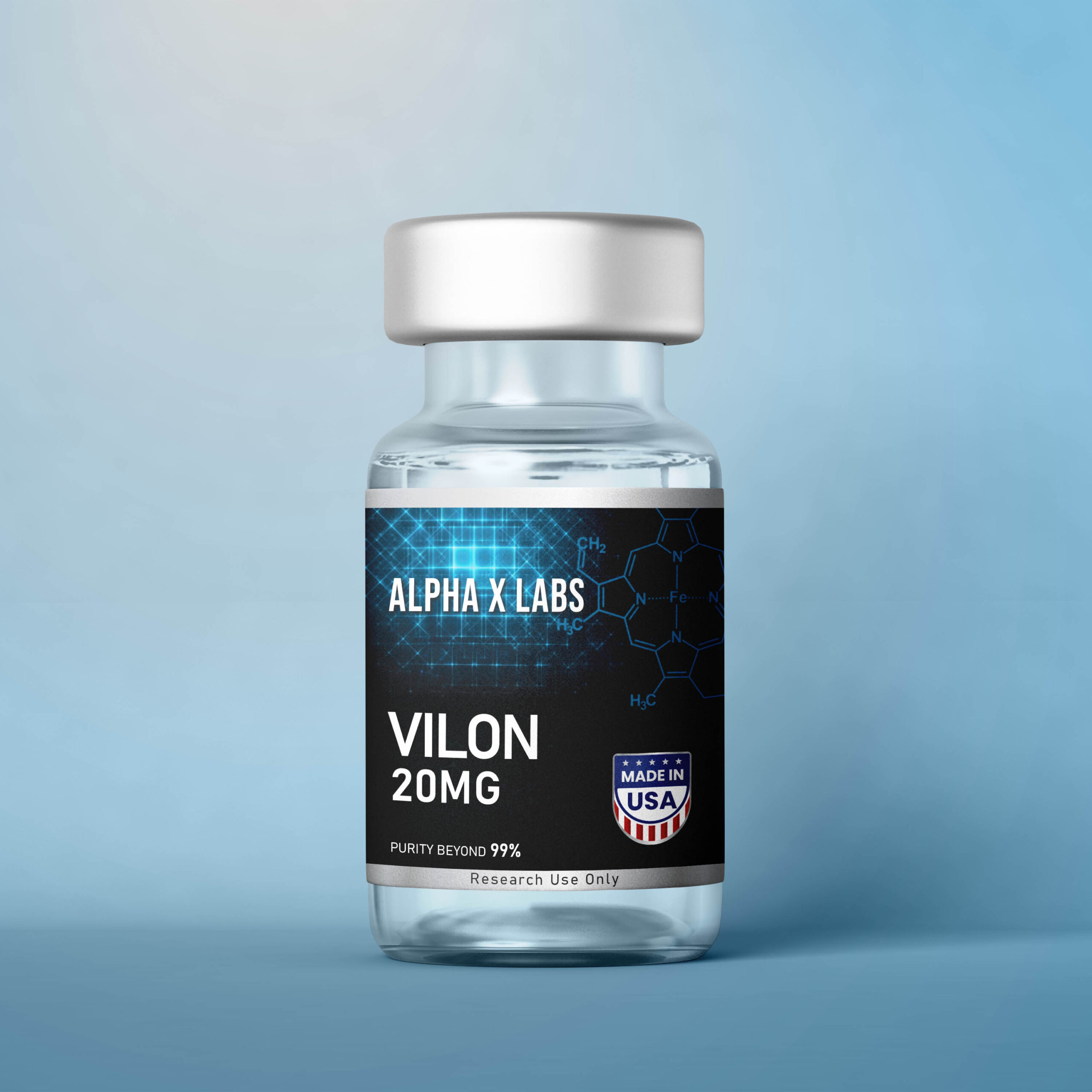
Description
Vilon is a dipeptide composed of the amino acids lysine and glutamic acid. It also goes by the name Lysylglutamic Acid or Lysylglutamate. It is one of the shortest peptides suggested to have potential actions related to immune system modulation, cellular aging, and gene expression.
Vilon appears to exert potential effects by possibly interacting with chromatin structure, which may influence gene activity. Some research hypotheses suggest that Vilon may help “unroll” chromatin, activate ribosomal genes to stimulate protein synthesis, and possibly reactivate genes that have become inactive or silent due to aging.
Overview
As a bioregulator peptide, researchers speculate that Vilon may support functions within the immune system, including activation of immune cells. Some studies have reported that Vilon may act on spleen cells to influence interleukin‑2 mRNA synthesis, a signaling molecule involved in immune regulation. It has also been described as having immunomodulatory and antiallergic activity in certain experimental models.
One experimental study suggested that Vilon may enhance the expression of the CD5 marker in thymic cells, which could play a role in the development and maturation of certain immune cell types.
Chemical Makeup
Molecular formula: C₁₁H₂₁N₃O₅
Molecular weight: 257.30 g/mol
Other known titles: Lysylglutamate, normophthal, Lysylglutamic acid
Research and Experimental Context
Cellular Lifespan and Aging
Some laboratory research in animal models has explored whether Vilon might influence cellular longevity and aging processes. In certain setups, it was suggested that Vilon may support morphological stability and regenerative activity in older tissue samples, leading to hypotheses about its role in aging research.
Immune Modulation
Vilon has been investigated for immune system effects, with some studies reporting potential modulation of immune cell signaling and gene expression in spleen and thymus cells. These effects have been discussed in the context of immune homeostasis and cell development pathways.
Cancer‑Related Research
A few experimental studies have examined whether Vilon might moderate the development or progression of carcinogenic cells in animal models, with some research suggesting reduced tumor incidence or growth in specific contexts, though findings vary and require further study.
Gene Expression and Metabolic Effects
Some research has proposed that Vilon may influence gene expression patterns in organs such as the heart, and possibly affect metabolic regulators like fibrinolysis and coagulation factors, though the mechanisms are not fully understood.
Vilon peptide is available for research and laboratory purposes only. Please review and adhere to our Terms and Conditions before ordering.