Description
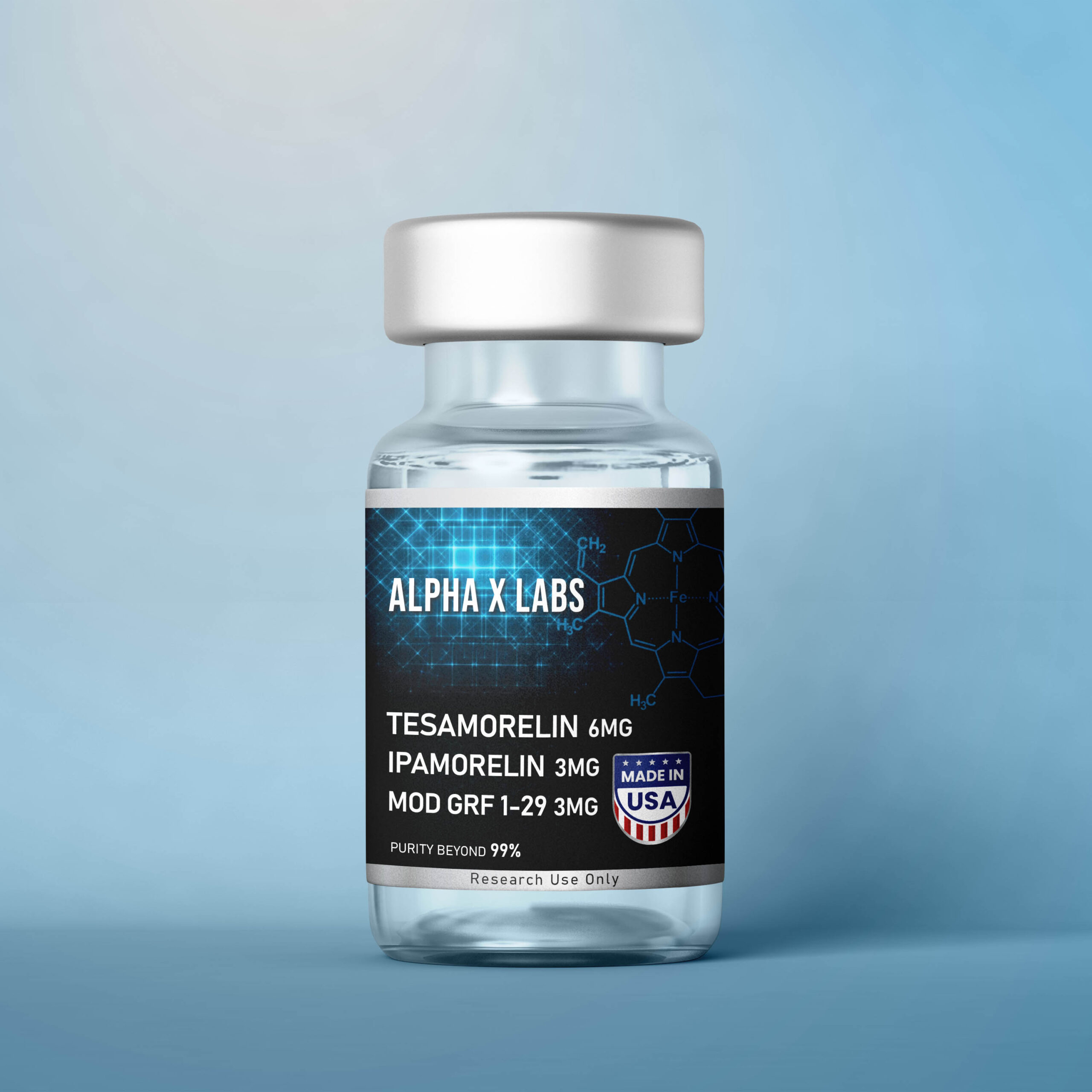
Tesamorelin, Mod GRF 1‑29, and Ipamorelin are all synthetic peptides that research suggests may influence the synthesis and secretion of growth hormone. When presented together as a blend, these peptides are thought to act synergistically, potentially engaging multiple receptor pathways related to growth hormone regulation in experimental settings.
Tesamorelin is a modified growth hormone‑releasing hormone (GHRH) analog developed to stimulate the release of growth hormone. It is often presented as a modified sequence to improve stability and receptor interaction.
Mod GRF 1‑29 is another GHRH analog that consists of the first 29 amino acids of the native hormone, modified to enhance resistance to enzymatic breakdown and extend its activity.
Ipamorelin is a growth hormone secretagogue (GHS) peptide that appears to act on ghrelin receptors (GHS‑R1a), which may stimulate growth hormone release. It is often studied for its selective action on growth hormone pathways with minimal influence on other pituitary hormones.
When combined, these peptides are posited by researchers to act through multiple signaling pathways in the anterior pituitary gland, potentially enhancing growth hormone release more than when presented individually.
Chemical Makeup
Molecular Formula:
• Tesamorelin: C₁₇₆H₃₀₆N₅₂O₅₅
• Mod GRF 1‑29: C₁₅₂H₂₅₂N₄₄O₄₂
• Ipamorelin: C₃₈H₄₉N₉O₅
Molecular Weight:
• Tesamorelin: (not specified on page)
• Mod GRF 1‑29: 3367.9 g/mol
• Ipamorelin: 711.8 g/mol
Other Known Titles:
• Tesamorelin: Modified GHRH peptide
• Mod GRF 1‑29: CJC‑1295 NO DAC
• Ipamorelin: NNC 26‑0161
Research and Experimental Context
Growth Hormone Synthesis
Clinical and experimental research has examined how peptides that act on different hormone regulatory pathways may increase growth hormone secretion. Tesamorelin and Mod GRF 1‑29 are hypothesized to interact with growth hormone‑releasing hormone receptors, while Ipamorelin appears to interact with ghrelin receptors, potentially stimulating the release of growth hormone via multiple pathways.
Appetite and Neural Signaling
Because peptides like Ipamorelin interact with ghrelin receptors, some models suggest potential impacts on appetite and broader metabolic signaling. However, these observations are primarily from research studies, not clinical recommendations.
Lean Body Mass and Metabolism
By stimulating growth hormone synthesis and secretion, peptide blends like this have been explored in laboratory settings for potential influences on body composition, nitrogen balance, and metabolic pathways.
Tesamorelin + Mod GRF 1‑29 + Ipamorelin peptide blend is available for research and laboratory purposes only. Please review and adhere to the Terms and Conditions before ordering.