Description
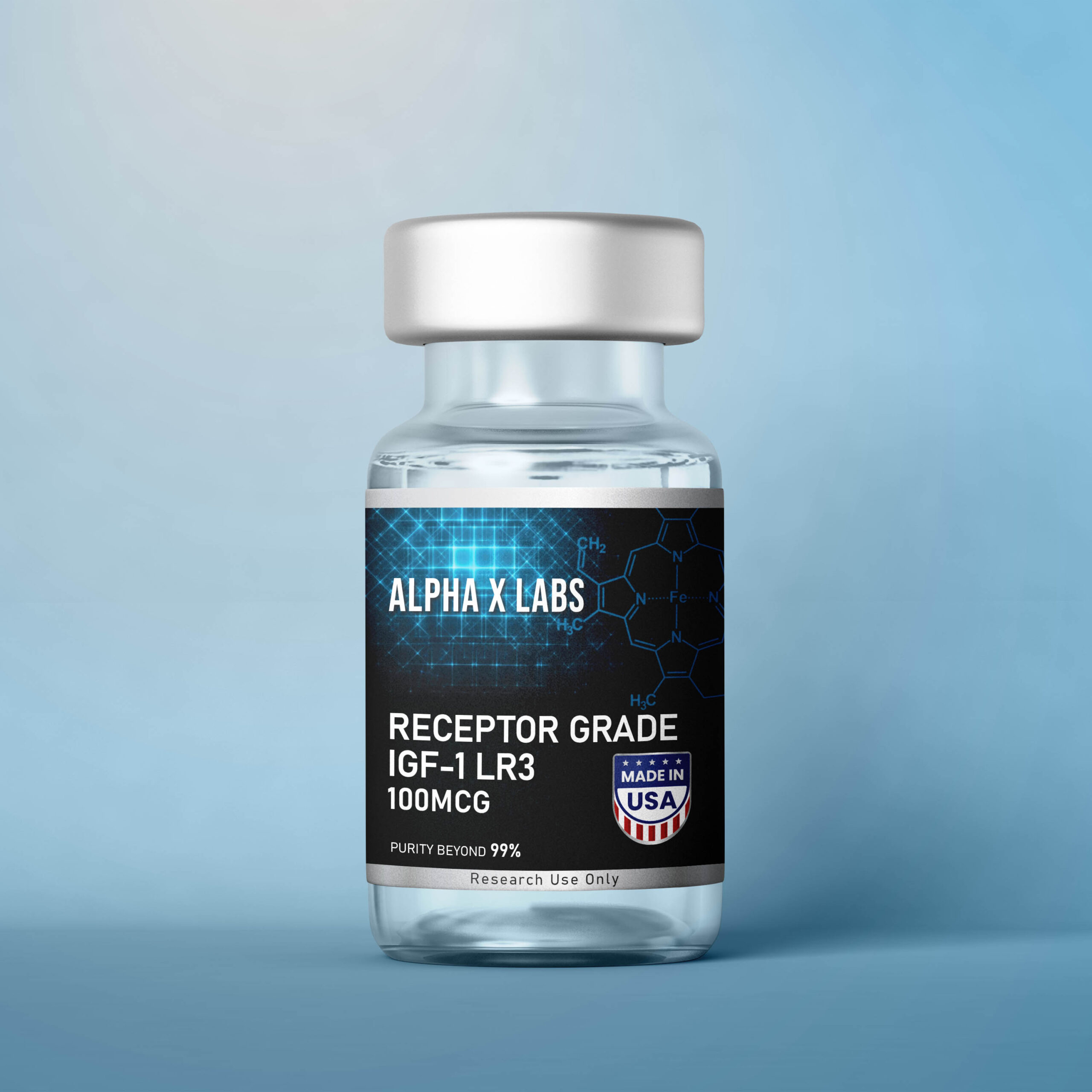
Receptor Grade IGF-1 LR3 Peptide
Between 1940 and 1950, the growth hormone somatotropin was identified and researched, and factors with insulin-like activity were isolated and termed somatomedins. Subsequent research led to the identification of insulin-like growth factors (IGFs) due to their structural and functional similarities to insulin. Receptor Grade IGF-1 LR3 is a synthetic variant of the naturally occurring Insulin-Like Growth Factor-1 (IGF-1) developed through genetic and peptide engineering.
Receptor Grade IGF-1 LR3, also referred to as Long arginine 3 IGF-1 or LR3-IGF-1, includes an extra 13 amino acids at its N-terminus and a substitution of arginine at position three, resulting in an 83-amino-acid peptide compared with the 70 amino acids found in native IGF-1. This structural modification is thought to reduce binding to IGF binding proteins, potentially increasing its availability in research environments and altering how it interacts with cell receptors.
Receptor Grade IGF-1 LR3 peptide is developed as a high-purity research reagent intended for controlled laboratory and in-vitro studies.
Overview
IGF proteins are believed to exert potential biological actions by binding to IGF-1 receptors, although IGF-binding proteins can regulate their availability in circulation. IGF-1 LR3’s modified structure is thought to bind less to IGF-binding proteins (IGFBPs), which may result in increased free peptide available for receptor interaction in research settings.
Some experimental studies in lab models have explored the anabolic potential of IGF-1 LR3, with murine investigations suggesting possibly stronger cellular growth signals compared with native IGF-1 in certain controlled conditions.
Chemical Makeup
Molecular Formula: C₄₀₀H₆₂₅N₁₁₁O₁₁₅S₉
Molecular Weight: 9117.5 g/mol
Other Known Titles: Long-(Arg3) insulin-like growth factor-I, Insulin-like growth factor long chain R3
Research and Experimental Studies
Anabolic Signaling and Tissue Growth
Limited research in preclinical or cell culture models indicates that IGF-1 LR3 may exhibit potential anabolic activity compared with native IGF-1, including effects on cellular protein synthesis and growth markers in certain experimental contexts.
Glucose Uptake and Metabolic Activity
Some studies suggest that peptides related to IGF-1 may influence glucose uptake and metabolism through signaling pathways such as PI3K/Akt and AMPK, although these findings are specific to lab research and not clinical recommendations.
Muscle-Related Research
Preliminary work in lab settings has also examined how IGF-1 analogs like LR3 may impact cellular markers related to muscle protein dynamics, including potential effects on regulatory proteins involved in muscle growth and differentiation.
This peptide is available for research and laboratory purposes only. Please review and adhere to the site’s Terms and Conditions before ordering.