Description
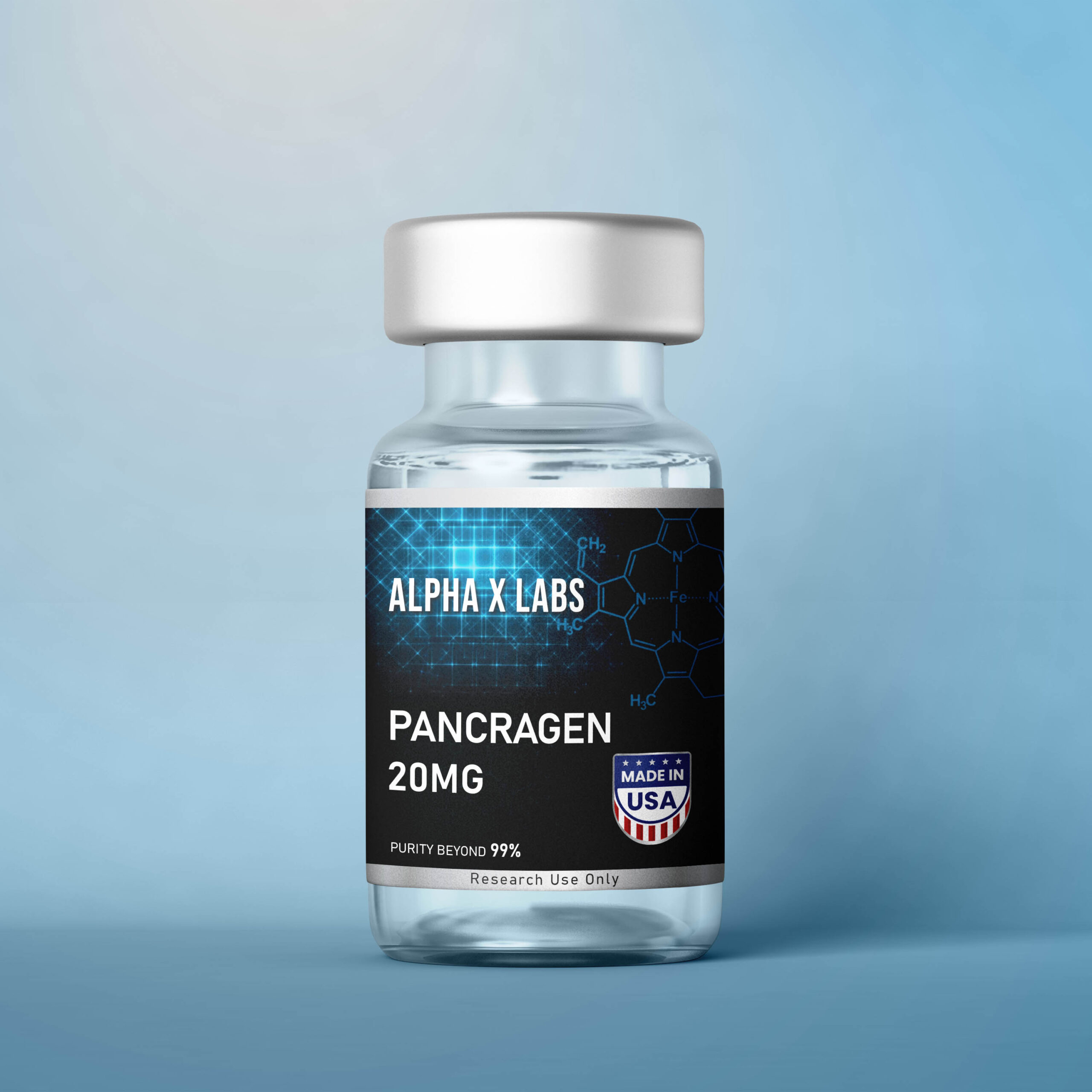
Pancragen Peptide
Pancragen is a tetrapeptide with the sequence Lys–Glu–Asp–Trp (KEDW). It is a synthetic structural analog of a peptide isolated from pancreatic cells and is considered a prospective bioregulator for pancreatic cellular functions and aging-related metabolic regulation.
This peptide has been studied in laboratory settings for its ability to penetrate cellular membranes and interact with the nucleus and nucleolus of pancreatic cells. It may influence gene transcription related to cell differentiation and functional activity of the pancreas.
Chemical Makeup
Molecular formula: C₂₆H₃₆N₆O₉
Molecular weight: 576.25 g/mol
Sequence: Lys-Glu-Asp-Trp
Other known titles: KEDW, DWa (amidate)
Research and Experimental Studies
Pancragen and Pancreatic Cells
Pancragen has been investigated for its potential impact on pancreatic cell differentiation and function. In preclinical models, it was suggested that Pancragen may up-regulate key transcription factors — such as Ptf1a, Pdx1, and Pax6 — that are essential for the proper differentiation and maturity of both acinar and islet cells in the pancreas. These effects were more apparent in aged cell cultures where normal expression of these proteins typically decreases with age.
Studies in murine models with experimentally induced metabolic dysfunction showed that exposure to Pancragen was associated with changes in pancreatic morphology, including enhanced insulin production from β-cells and reduced glucagon production from α-cells, as well as normalization of cellular proliferation and apoptosis markers.
Metabolic Regulation
Some research has explored Pancragen’s potential actions on metabolic processes. In experimental models, treatment with Pancragen was associated with improvements in glucose utilization, reduced fasting glucose levels, and modulation of insulin dynamics — suggesting a possible role in glucose metabolism under certain conditions.
Aging and Cellular Markers
Pancragen has also been studied in contexts related to cellular aging and stress responses. In laboratory settings, Pancragen exposure correlated with decreased activity of aging biomarkers like caspase-3 and cathepsin B, as well as modulation of inflammatory markers such as TNF-α and IGF-I, indicating potential influence on anti-apoptotic processes and cellular vitality.
Pancragen peptide is available for research and laboratory purposes only. Please review and adhere to the site’s Terms and Conditions before ordering.