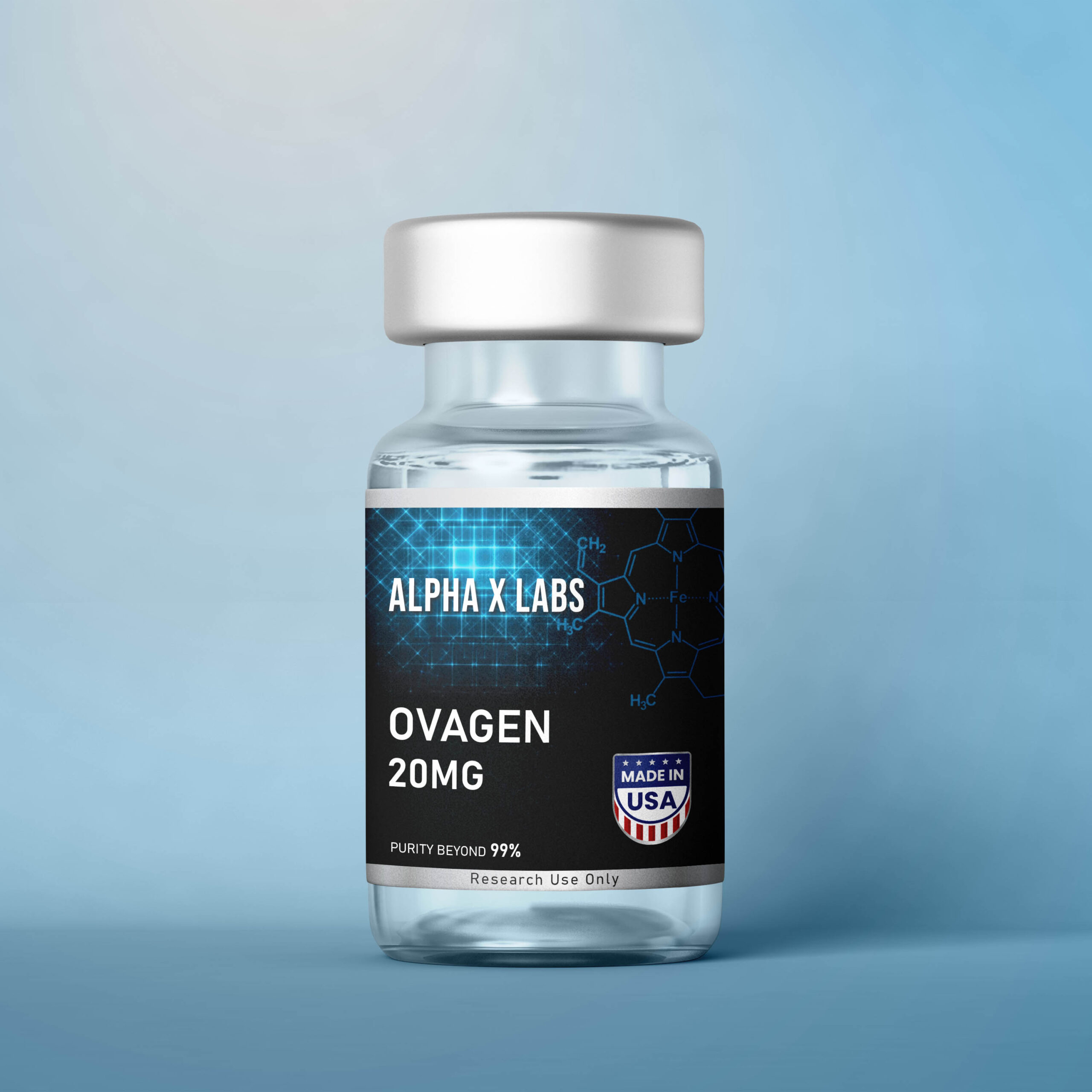
Description
Ovagen, also known by its sequence Glu–Asp–Leu (EDL), is classified among short regulatory peptides that are proposed to act as genome‑level bioregulators. These types of compounds are often referred to as cytomedines — peptide messengers that may operate as independent signaling molecules, helping cells adapt their functional programs to internal and external cues. Within this broader family, Ovagen has been described by experts as a tripeptide that may form complexes with AT‑rich DNA sequences in the minor groove of DNA.
It is proposed that this peptide may bind preferentially to AT‑rich stretches of mammalian DNA in the minor groove, where many regulatory interactions usually occur. Through these types of interactions, Ovagen is suggested to interact with the expression of genes encoding cellular aging markers and other regulators of cellular stress responses. In vitro data from renal and hepatic models further suggest that Ovagen may display protective potential by modulating gene expression programs linked to proliferation, redox balance, and cellular resilience.
Chemical Makeup
Other Known Titles: EDL; H‑Glu‑Asp‑Leu‑OH
Molecular Weight: 375.37 g/mol
Molecular Formula: C₁₅H₂₅N₃O₈
Research and Clinical Studies
Ovagen Research in Cellular Aging
Research by Khavinson et al. describes Ovagen as having possible geroprotective actions in aging kidney (renal) cell cultures. When added to both young and aged renal cells, Ovagen reportedly increases cell proliferation while reducing the expression of several cellular aging‑associated markers. Ovagen has been noted to associate with specific AT‑rich DNA regions, which may modulate transcription of genes related to p16, p21, p53, and SIRT6, potentially shifting cells away from a senescent‑like state toward renewed proliferative capacity.
Ovagen Research in Kidney Cells
Other experimental work suggests Ovagen may influence tubular water and sodium dynamics in kidney cells without disrupting intrinsic autoregulation, and may support prooxidant–antioxidant balance in aged renal cells by reducing lipid peroxidation and increasing antioxidant enzyme activity.
Ovagen Research in Liver Cells
Experimental work reported in studies and patents describes Ovagen as a tripeptide with potential hepatoregenerative and hepatoprotective actions under laboratory conditions. In liver cell systems, Ovagen was observed to possibly prolong cell survival and stimulate hepatic cell proliferation. Murine models of liver regeneration after partial hepatectomy and experimental cirrhosis suggest Ovagen may increase dividing cells in regenerating liver tissue, support biochemical markers associated with liver injury, and possibly increase hepatic glycogen content.
Ovagen peptide is available for research and laboratory purposes only. Please review our Terms and Conditions before ordering.