Description
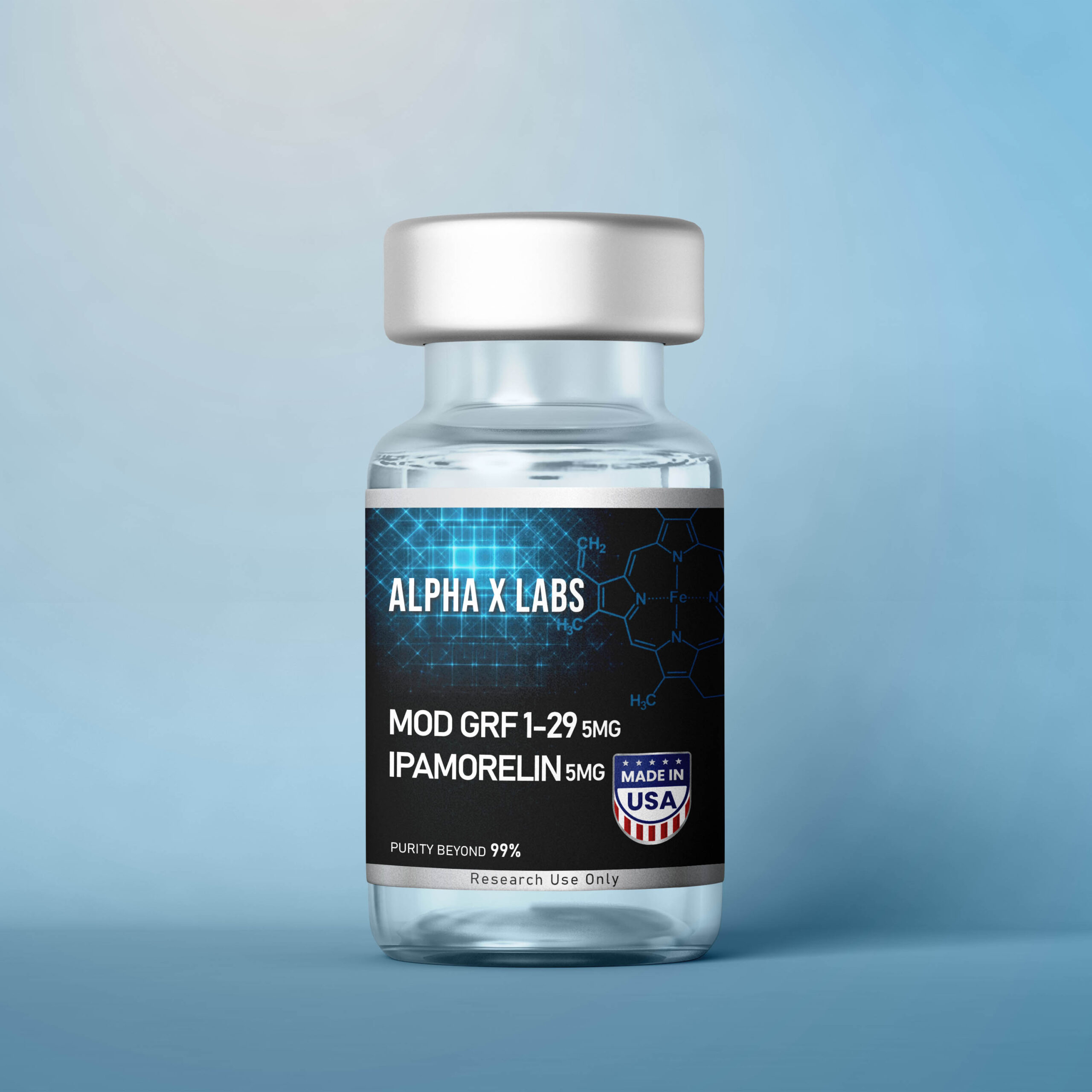
Mod GRF 1‑29 and Ipamorelin are synthetic peptides suggested by researchers to potentially stimulate the synthesis and release of growth hormone. Mod GRF 1‑29 is a modified version of Growth Hormone‑Releasing Hormone (GHRH), consisting of the first 29 amino acids of GHRH with specific substitutions to enhance stability. Ipamorelin is a synthetic pentapeptide classified in the growth hormone secretagogue (GHS) group — peptides thought to activate ghrelin receptors and potentially stimulate growth hormone release. (corepeptides.com)
The blend of these peptides is believed to possibly provide synergistic action, where Mod GRF 1‑29 may act on the GHRH receptor in the anterior pituitary gland, and Ipamorelin may act on the ghrelin (growth hormone secretagogue) receptor, potentially resulting in stimulation of growth hormone secretion. (corepeptides.com)
Chemical Makeup
Molecular Formula:
Mod GRF 1‑29: C152H252N44O42
Ipamorelin: C38H49N9O5
Molecular Weight:
Mod GRF 1‑29: 3367.9 g/mol
Ipamorelin: 711.8 g/mol
Other Known Titles:
Mod GRF 1‑29: CJC‑1295 NO DAC, tetrasubstituted GRF 1‑29
Ipamorelin: NNC 26‑0161
Research and Clinical Studies
Mod GRF 1‑29 & Ipamorelin Blend and Growth Hormone Release
Multiple clinical and experimental studies have investigated how growth hormone secretagogues and releasing hormone analogs interact with pituitary receptors to stimulate growth hormone secretion. Mod GRF 1‑29 appears to act via Growth Hormone‑Releasing Hormone receptors, while Ipamorelin is thought to activate ghrelin receptors on pituitary cells. When studied together, these peptides may potentially enhance growth hormone release more than when used individually. (corepeptides.com)
Mod GRF 1‑29 & Ipamorelin Blend and Food Intake
Some research on growth hormone secretagogues suggests that peptides like Ipamorelin may influence food intake by acting on ghrelin receptors, which are involved in hunger signaling. One clinical observation reported increased food consumption in test subjects after exposure to growth hormone secretagogues, which correlated with increased growth hormone levels in some settings