Description
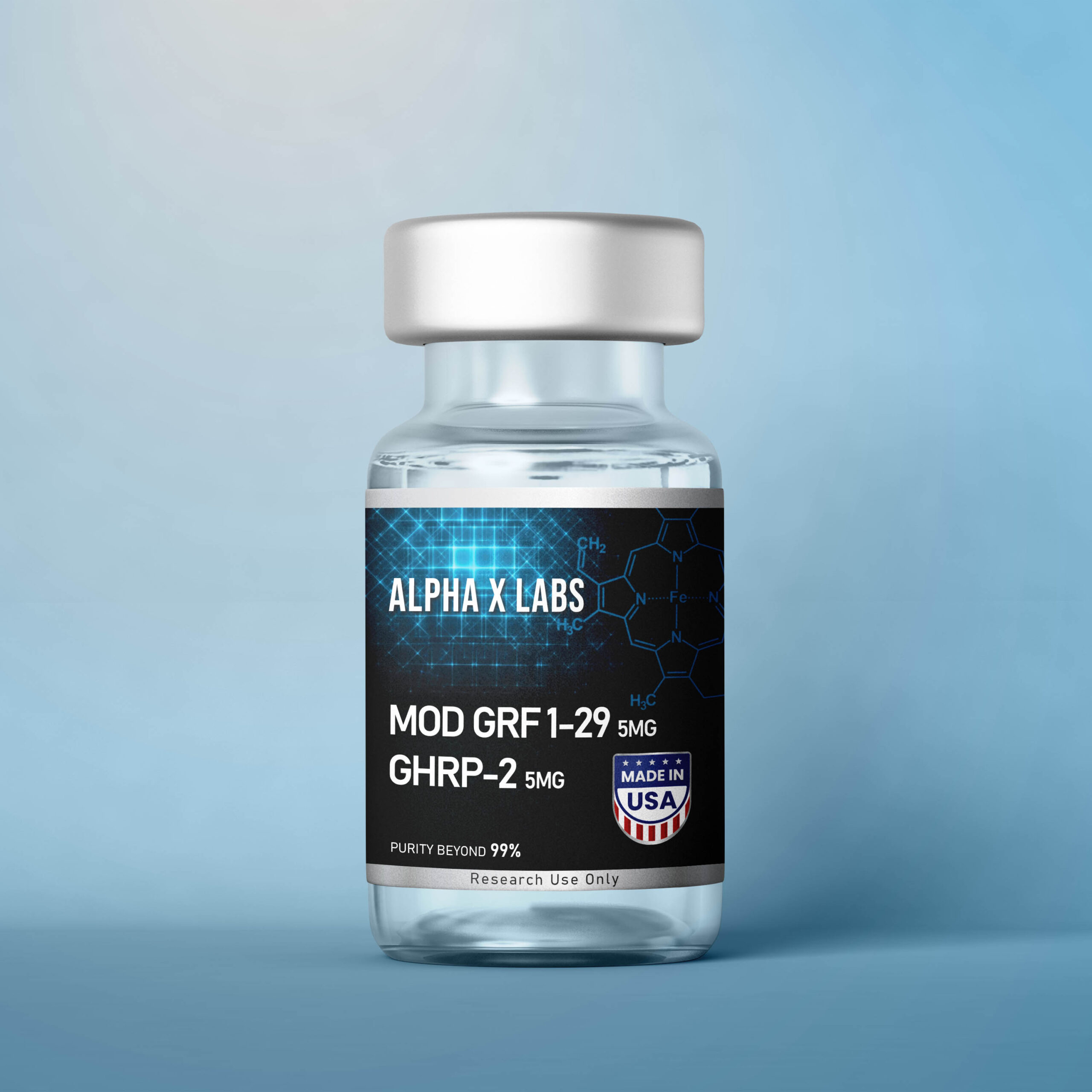
GHRP‑2 and Modified GRF 1‑29 peptides are synthetic peptides developed with the intention to aid in synthesis, secretion, and regulation of growth hormone synthesis. These peptides appear to exert synergistic action when taken together as a blend. GHRP‑2 is a synthetic peptide that appears to activate receptors for ghrelin, a naturally occurring peptide that regulates growth hormones and increases appetite. This is why it is also called the “hunger hormone.” GHRP‑2 activates ghrelin receptors in the pituitary gland, which are also known as growth hormone secretagogue receptors, and may potentially stimulate growth hormone release. Thus, GHRP‑2 has been characterized by researchers as a growth hormone secretagogue (GHS).
Modified GRF 1‑29 (or Mod GRF 1‑29) is a man‑made peptide analog of the naturally occurring growth hormone‑releasing hormone (GHRH). It consists of the first 29 amino acids of the native hormone, which appears sufficient for activating GHRH receptors in the somatotroph cells of the anterior pituitary gland and triggering growth hormone release. It is slightly modified by substituting four amino acids in the original chain to potentially enhance its pharmacokinetics and stability.
GHRP‑2 and Mod GRF 1‑29 have been studied for their individual potential to stimulate the somatotroph cells in the pituitary gland, possibly triggering the secretion of growth hormone.
Chemical Makeup
Molecular formula:
-
Modified GRF 1‑29: C152H252N44O42
-
GHRP‑2: C45H55N9O6
Molecular weight:
-
Modified GRF 1‑29: 3367.9 g/mol
-
GHRP‑2: 817.9 g/mol
Other known titles:
-
Modified GRF 1‑29: Mod GRF 1‑29, CJC‑1295 without DAC
-
GHRP‑2: Pralmorelin, Growth hormone‑releasing peptide‑2
Research and Clinical Studies
Tolerability: Studies in animal models suggest that GHRP‑2 at doses showing GH‑releasing activity did not produce serious general pharmacological effects, indicating a potentially favorable tolerability profile in these models.
Appetite: Because GHRP‑2 may activate ghrelin receptors beyond the pituitary, it has been associated in research with increased hunger and food intake in controlled settings. One study reported participants consuming significantly more food after peptide exposure, with corresponding increases in growth hormone levels.
Growth Hormone Secretion: Literature reviews and experimental work suggest that peptides like Mod GRF 1‑29 and GHRP‑2 may increase growth hormone secretion by engaging separate receptor systems — Mod GRF 1‑29 via GHRH receptors and GHRP‑2 via ghrelin receptors — which could have synergistic effects on hormone release.
Mod GRF 1‑29 & GHRP‑2 blend is available for research and laboratory purposes only. Please review and adhere to the site’s Terms and Conditions before ordering.