Description
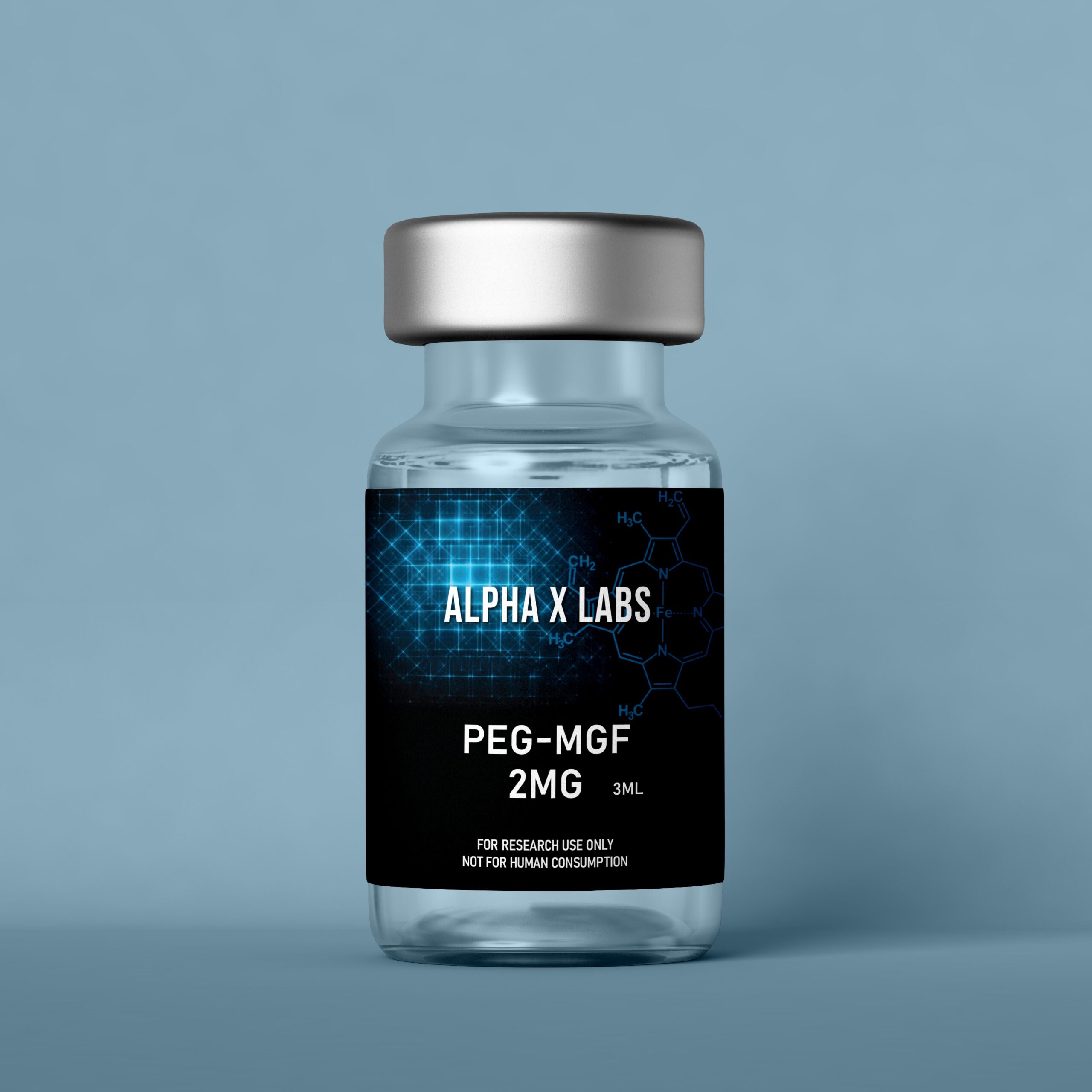
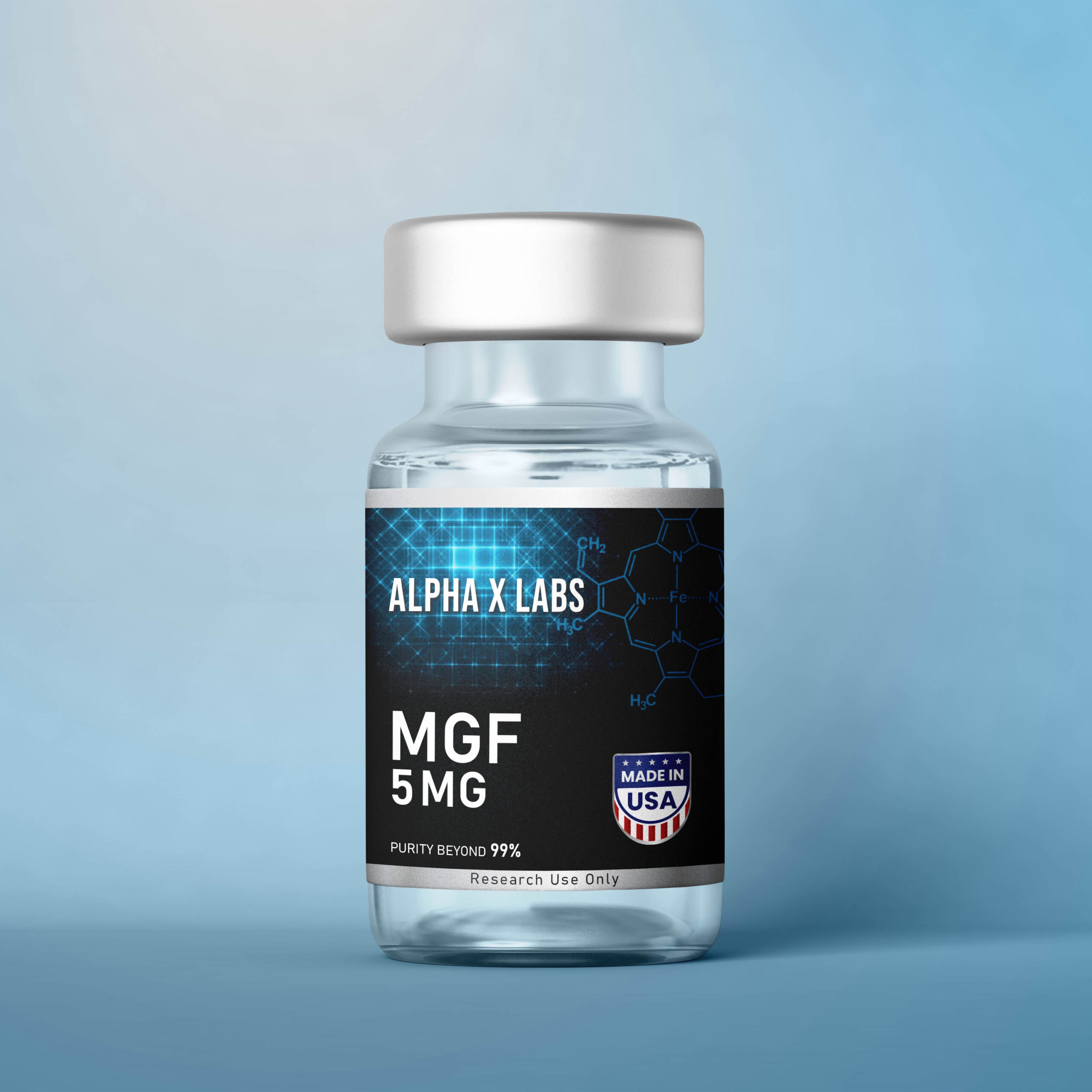
MGF stands for Mechano Growth Factor, an endogenous, naturally occurring peptide that belongs to the class of IGF‑1 (insulin‑like growth factor) family. What differentiates MGF from systemic IGF‑1 is that it contains additional base pairs at exon 5 in its structure, which may introduce unique characteristics. Researchers consider MGF to be an isoform of IGF‑1, also known as IGF‑1Ec (otherwise referred to as full‑length MGF).
As IGF‑1 undergoes alternative splicing and transcription, it produces three isoforms. Under stress conditions, such as resistance activity in muscle groups, this splicing can produce MGF. A synthetic version of the MGF peptide, composed of 24 amino acids attached to the C‑terminal of the isolated MGF domain (called MGF‑Ct24E peptide or E‑domain of IGF‑1Ec), has been studied for its potential to induce muscle precursor cell proliferation.
Chemical Makeup
Molecular Formula: C₁₂₄H₂₀₄N₄₂O₄₁S₁
Molecular Weight: 2971.99 g/mol
Other Known Titles: MGF‑E, MGF‑Ct24E
Research and Clinical Studies
MGF Peptide and Muscle Mass
One study evaluated the synthetic MGF‑E domain’s potential on muscle cells at various ages. The MGF peptide appeared to delay the onset of cellular senescence in some cultures and increase muscle cell size by enhancing myotube fusion — suggesting potential action in muscle regeneration and maintenance.
MGF Peptide and Muscle Recovery
In mouse models with induced muscle injury, exposure to MGF appeared to reduce inflammatory markers and oxidative stress, which may contribute to improved muscle healing after injury.
MGF Peptide and Anti‑Apoptotic Effects
Another study looked at MGF’s potential in cardiac cells under hypoxic conditions and reported that the peptide may increase migration of stem cells to damaged heart tissue and might inhibit apoptotic processes, suggesting possible protective effects.
MGF Peptide and Bone Healing
In experimental bone defect models, MGF exposure was associated with improved bone defect healing compared to controls, suggesting a possible action on bone repair and cell proliferation pathways.
MGF Peptide and Brain Cells
Studies in rodent models suggested that increased MGF levels in the brain’s hippocampus may correlate with elevated markers of cell proliferation and neurogenesis, although research is still ongoing.
MGF peptide is available for research and laboratory purposes only. Please review and adhere to our Terms and Conditions before ordering.