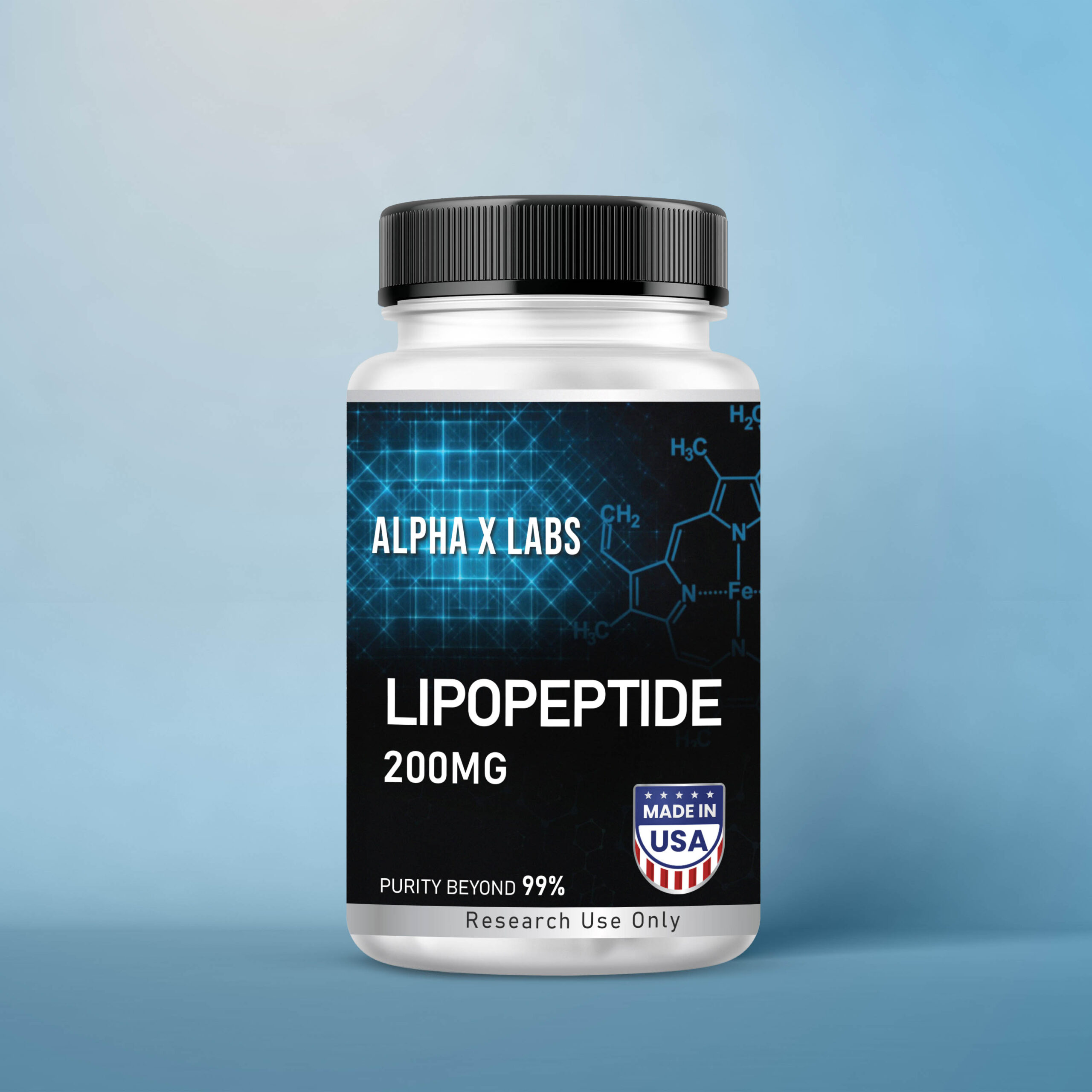
Description
Lipopeptide, characterized by the sequence Palmitoyl-Gly-Gln-Pro-Arg, is a palmitoylated fragment derived from immunoglobulin G (IgG). IgG is a type of antibody considered a crucial component of the immune system that apparently mediates various inflammatory processes. The palmitoylation of this peptide fragment, which involves the attachment of a palmitic acid molecule, may also enhance its experimental potential. This modification appears to improve the lipopeptide’s ability to penetrate through the corneal layers of skin tissue models. The increased penetration appears to be due to the added lipid (fat) component, which aids in traversing the lipid-rich environment of the outer layers of skin tissue.
Chemical Makeup
Molecular formula: C₃₈H₆₈N₆O₈
Molecular weight: 736.9 g/mol
Sequence: Pal-Gly-Gln-Pro-Arg
Other known titles: Pal-GQPR, Palmitoyl Tetrapeptide-7/3
Research and Clinical Studies
Lipopeptide and the Extracellular Dermal Matrix
One study conducted a series of evaluations on a blend of peptides including Lipopeptide (Pal-GQPR) for their potential action on skin cell structure. Echography tests suggested that this blend might reduce the thickness of the subepidermal low-echogenic band and support its density, indicating a possible improvement in skin structure. Moreover, studies in murine models hinted that these peptides might potentially enhance the extracellular dermal matrix structure compared to a placebo. It was posited that this compound might also play a role in decreasing the secretion of interleukin-6 (IL-6), a cytokine involved in inflammatory responses. IL-6 is a molecule typically associated with immune responses and appears to be elevated during inflammation, potentially contributing to various inflammatory skin conditions. The possible reduction of IL-6 secretion by Lipopeptide suggests that it may aid in mitigating inflammation, especially following UVB radiation exposure. Additionally, Lipopeptide is thought to potentially stimulate the production of critical structural components around skin cells, such as laminin IV and V, as well as collagen VII. Laminins, particularly types IV and V, are integral components of the basement membrane, a layer that supports epithelial cells and is considered essential for tissue integrity. They play a crucial role in cell adhesion, differentiation, and migration, which are vital for skin repair and maintenance. Collagen VII is a key component of anchoring fibrils that provide structural support and stability to the skin. The stimulation of these components by Lipopeptide may imply a potential role in enhancing the skin’s structural framework.
Lipopeptide and Photoaged Skin Cells
The potential of Lipopeptide was investigated in a randomized controlled trial (RCT) as a blend alongside other peptides and active ingredients. This peptide, along with other compounds, was assessed for its potential in improving the appearance of photoaged skin cells. Twelve days into the experiment, the peptide was observed to have stimulated the deposition of fibrillin-1 in the skin, a marker for skin repair, compared to baseline levels. This was comparable to the apparent results observed with all-trans retinoic acid, considered to be a clinical standard for photoaged skin cells. The accumulation of fibrillin-1 indicates a potential structural change in the skin. In a six-month RCT, the peptide appeared to potentiate an improvement in skin wrinkles compared to baseline. The vehicle formulation, which lacked the active ingredients, did not show similar results, suggesting that the ingredients in the test product, including Lipopeptide, may contribute to the observed effects. Furthermore, the study investigated the distribution of fibrillin-1 in skin biopsies from the RCT. Skin applied with the Lipopeptide appeared to have a significant increase in fibrillin-1 in the papillary dermis compared to the placebo group. This supports the idea that long-term experiments with Lipopeptide may lead to a visible improvement in the photoaged skin. The researchers concluded that Lipopeptide may produce significant improvement in the appearance of wrinkles and further supports the study of fibrillin-1 as a biomarker for dermal repair.
Lipopeptide is available for research and laboratory purposes only. Please review and adhere to our Terms and Conditions before ordering.