Description
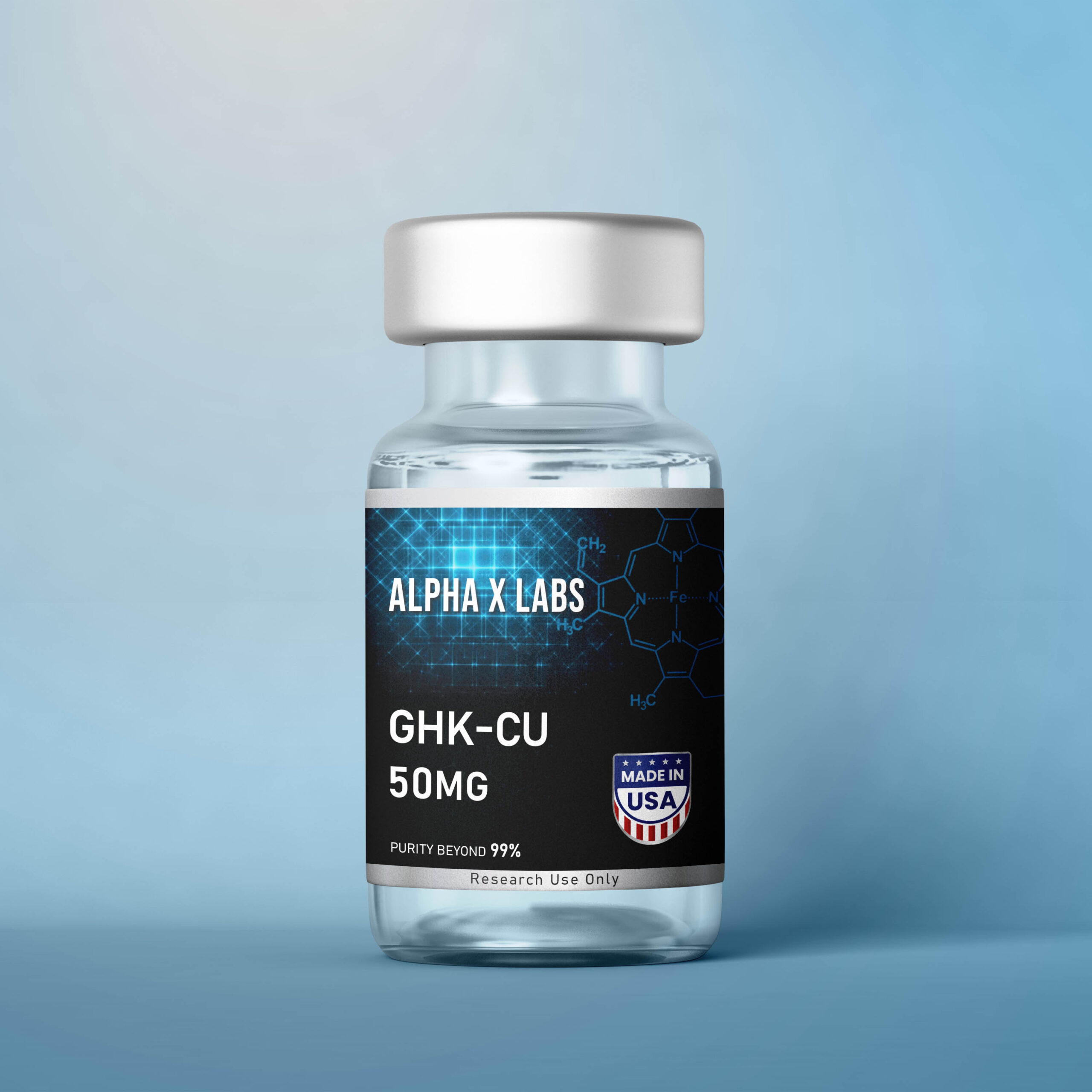
GHK-Cu is a naturally occurring copper-binding peptide composed of 3 amino acids, i.e. glycyl-L-histidyl-L-lysine. “-Cu” refers to the chemical addition of copper. GHK-Cu (Copper) is a small tripeptide found in plasma and reportedly releases at the time of injury. The concentration of GHK-Cu declines with age. At about 20 years old, the average concentration of GHK-Cu is approximately 200 ng/mL and declines to about 80 ng/mL by around 60 years of age.
Studies have suggested when the plasma GHK peptide is added to cell culture in nanomolar amounts, the peptide has the potential to induce a wide range of responses from growth stimulation to cell differentiation. During peptide isolation, researchers reported that it exhibits potential chelating properties and might co-isolate with nearly the same amount of copper ions and some iron found in cells. When the peptide was incubated as a bound complex with copper and iron molecules, maximal potential activity was reported.
Overview
Studies have suggested that the peptide exhibits potential in gene expression and may help reset elements of the genome. By this proposed mechanism, GHK-Cu may restore impaired cells, including damaged or pathological cells. Research reports a variety of potential actions including that it may tighten and reverse the thinning of aging skin structure, support the extracellular matrix, restore the skin barrier and moderate texture, hyperpigmentation and lesions, support tissue repair and mitigate inflammation, stimulate increased hair follicle size, exert antioxidant properties, and possibly influence gene restructuring.
Specifications
Molecular Formula: C₁₄H₂₃CuN₆O₄
Molecular Weight: 340.38 g/mol
Other Known Titles: glycyl-L-histidyl-L-lysine-copper 2+
Research Highlights
One early study observed the actions of the GHK-Cu complex (with vitamin C) on tumor cell growth. In experimental models, the complex showed potential to reduce growth of certain cancer cell types while promoting apoptosis pathways and gene expression related to DNA repair.
A clinical trial in diabetic subjects with neuropathic ulcers reported that wounds treated with GHK-Cu peptide gel showed improved wound closure compared to controls.
Other studies have investigated GHK-Cu’s antioxidant potential, showing it may help lower levels of reactive oxygen species and reduce oxidative stress markers in cells.
GHK-Cu peptide is available for research and laboratory purposes only. Please review and adhere to our Terms and Conditions before ordering.