Description
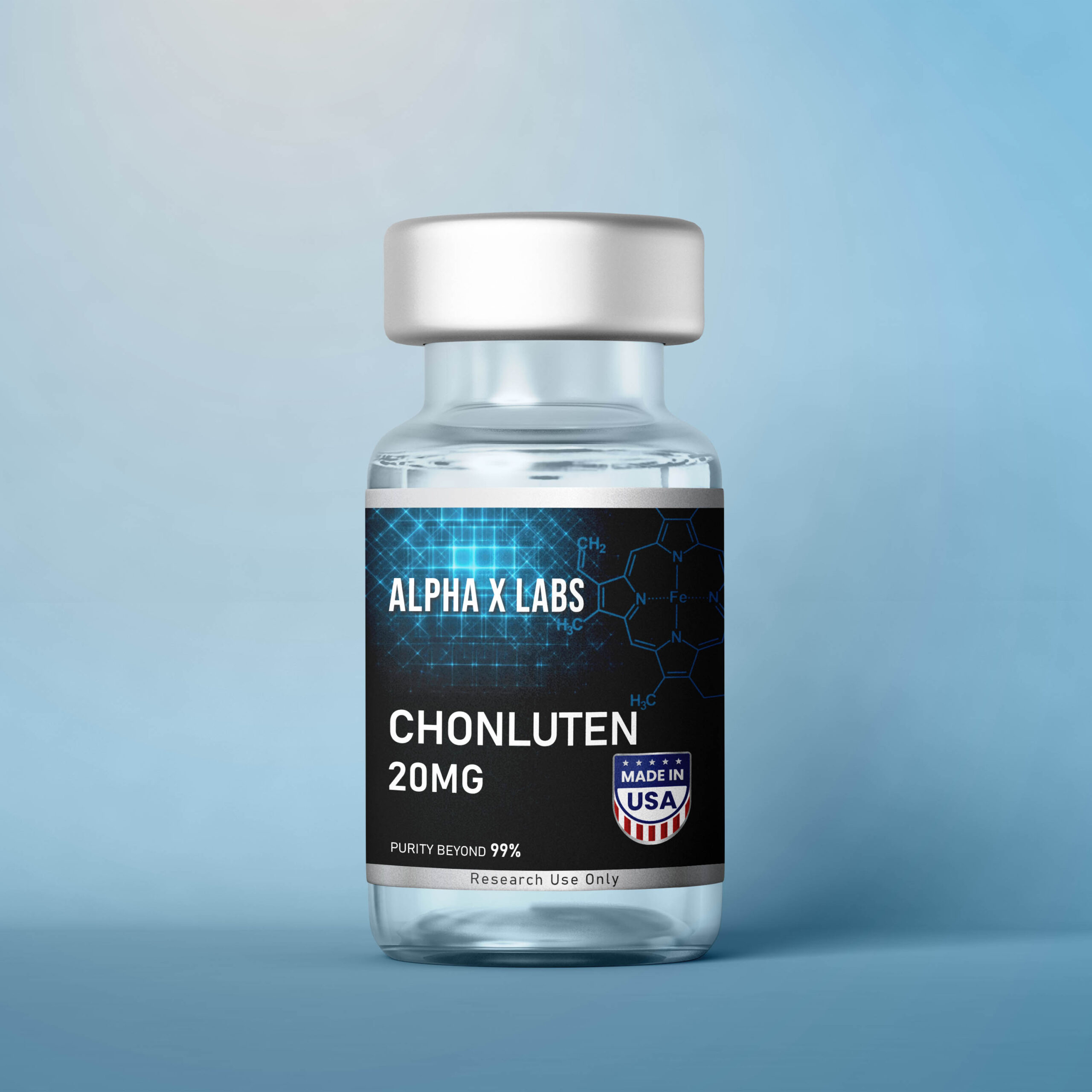
Chonluten, also known as EDG tripeptide or T-34, is a tripeptide that may potentially regulate the physiological processes of the respiratory system by influencing inflammation and proliferation. It may potentially restore mechanisms of anabolism and catabolism, critical to functional tissues. Chonluten is a peptide complex containing glycine, glutamine, and asparagine, which is considered to normalize the performance of bronchial mucous membrane cells.
Chonluten has been primarily researched for its potential to normalize the impact on target organs by replacing or supporting the activity of substances secreted by these morphological structures through immunomodulation. It may possibly increase the lifespan of mesenchymal stem cells (MCS) and possibly induce molecular mechanisms that contrast senescence. Chonluten appears to be organ-specific, with its primary potential exhibited in lung tissues, possibly extending action in the gastrointestinal tract. Chonluten may revitalize, regulate, and otherwise provide favorable actions on the airway and bronchial mucosa.
Chemical Makeup
Molecular Formula: C11H17N3O8
Molecular Weight: 319.27 g/mol
Structure: 4S)-4-amino-5-[[(2S)-3-carboxy-1-(carboxymethyl amino)-1-oxopropan-2-yl]amino]-5-oxopentanoic acid
Other Known Titles: Glu-asp-gly, Glutamyl-aspartyl-glycine, H-Glu-asp-gly-OH, T-34 tripeptide
Research and Clinical Studies
Chonluten Peptide and Inflammation Reduction
As lung capacity reduces, researchers suggest Chonluten may decrease the rate of cell death while encouraging proliferative activity via protection of the bronchial lining. The bronchial inner lining is a barrier between the external environment and internal structures. Different inflammatory conditions may affect this inner lining and change mucus production and the structure of the cells’ extracellular matrix. Chonluten’s proposed mechanisms of action may help reduce levels of inflammation within the lungs.
One such potential mechanism of action may be the initiation of phosphorylation in STAT molecules, especially STAT1, within immune cells called macrophage cells. STAT stands for “Signal Transducer and Activator of Transcription.” These molecules appear to be messengers inside the cells, mediating signals and passing them to the cellular nucleus. Thus, STAT1 works like a switch that turns on genes, and it might work together with other proteins to send immune signal messages into the macrophage cell’s nucleus, ultimately regulating this type of immune cell and reducing inflammation. The researchers also theorized that Chonluten may potentially decrease the activation of STAT3, another important protein that may act like a gene switch. STAT3 is involved in quick immune responses and might help control the gene for IL-6 (interleukin-6), an important immune system protein during inflammation. By affecting STAT3, Chonluten might change how IL-6 works, which could help reduce inflammation. Further, the researchers suggest Chonluten might exhibit some capacity to reduce levels of IL-6, TNF (tumor necrosis factor), and IL-17 in immune cells triggered by bacterial and other foreign substances. The scientists commented that the peptide apparently “inhibited in vitro tumor necrosis factor (TNF) production of monocytes exposed to pro-inflammatory bacterial lipopolysaccharide (LPS). The low TNF release by monocytes is linked to a documented mechanism of TNF tolerance, promoting attenuation of inflammatory action.” Chonluten might also reduce the sticking process between the inner lining of blood vessels and immune cells.
Chonluten Peptide and Gastrointestinal Tract Tissues
Chonluten’s suggested impact on the gastrointestinal tract is reportedly similar to that in the lungs, with studies positing its potential to reduce inflammation and prevent the prevalence of vascular changes that induce inflammatory diseases. For example, Chonluten might help repair cells in the stomach and intestinal tissues. It is posited to do this by controlling the activity of genes linked to antioxidant enzymes like superoxide dismutase (SOD). Research on Chonluten suggests that it might normalize these genes, helping to balance antioxidant defenses in the stomach lining. This might reduce oxidative stress, which harms cells, and encourage cell repair. It is also believed that Chonluten may reduce inflammation by affecting inflammation-related genes, such as TNF-α and cyclooxygenase-2 (Cox-2). By lowering the activity of these inflammation-causing substances, Chonluten might help control stomach tissue inflammation, aiding in cell repair. Additionally, Chonluten may promote new tissue growth, important for healing damaged areas. It might encourage the multiplication of fibroblasts, which are cells that help in tissue repair and the growth of new blood vessels in the healing tissue. It may also help repair damaged stomach lining by stimulating the growth of epithelial cells, which could lead to the recovery of damaged and ulcerated tissues. Furthermore, Chonluten may reduce excessive cell death (apoptosis) in the stomach lining. It is thought to possibly regulate the expression of heat shock protein 70 (HSP70), which protects cells from triggers that cause apoptosis. By controlling HSP70, Chonluten may possibly prevent excess cell death and promote the survival and repair of gastrointestinal tract tissues.
Chonluten Peptide and Gene Expression
Short peptides, such as Chonluten, have been researched in the context of certain modes of DNA expression, such as DNA methylation. Research suggests that “Short peptides, consisting of 2-7 amino acid residues, can penetrate into the nuclei and nucleoli of cells and interact with the nucleosome, the histone proteins, and both single- and double-stranded DNA. DNA-peptide interactions, including sequence recognition in gene promoters, are important for template-directed synthetic reactions, replication, transcription, and reparation. Peptides can regulate the status of DNA methylation, which is an epigenetic mechanism for the activation or repression of genes in both the normal condition, as well as in cases of pathology and senescence.”
Chonluten Peptide and the Immune System
Research studies suggest that Chonluten may regulate the immune system, stimulating or suppressing it to respond to advancing conditions. Chonluten’s possible mechanisms of action have been suggested to be mediated by many genes, including heat shock protein genes, antioxidative system genes like SOD, and TNF-alpha. The regulation of such genes may result in anti-inflammatory impacts, particularly c-Fos — a protein bioregulator of cell differentiation, survival, and proliferation that is activated in response to hypoxia and cellular damage. However, progressive expression might result in thickened bronchial mucosa or cancer.
Chonluten Peptide and Aerobic Activity
Research has also explored the role of the Chonluten tripeptide in various aerobic studies. Some studies suggested that several bioactive peptides elicit upregulating effects on muscle protein synthesis or increase muscular strength and recovery. Besides positive effects on contractile strength and recovery, recent investigations found that hydrolyzed proteins might also influence endurance performance and metabolism. Further research indicates that the Chonluten tripeptide might reduce stress hormone secretion and potentially improve the organism’s tolerance to low oxygen conditions. This suggests that the Chonluten tripeptide could help lung and muscle tissues work better when insufficient oxygen exists.
Chonluten peptide is available for research and laboratory purposes only. Please review and adhere to our Terms and Conditions before ordering