Description
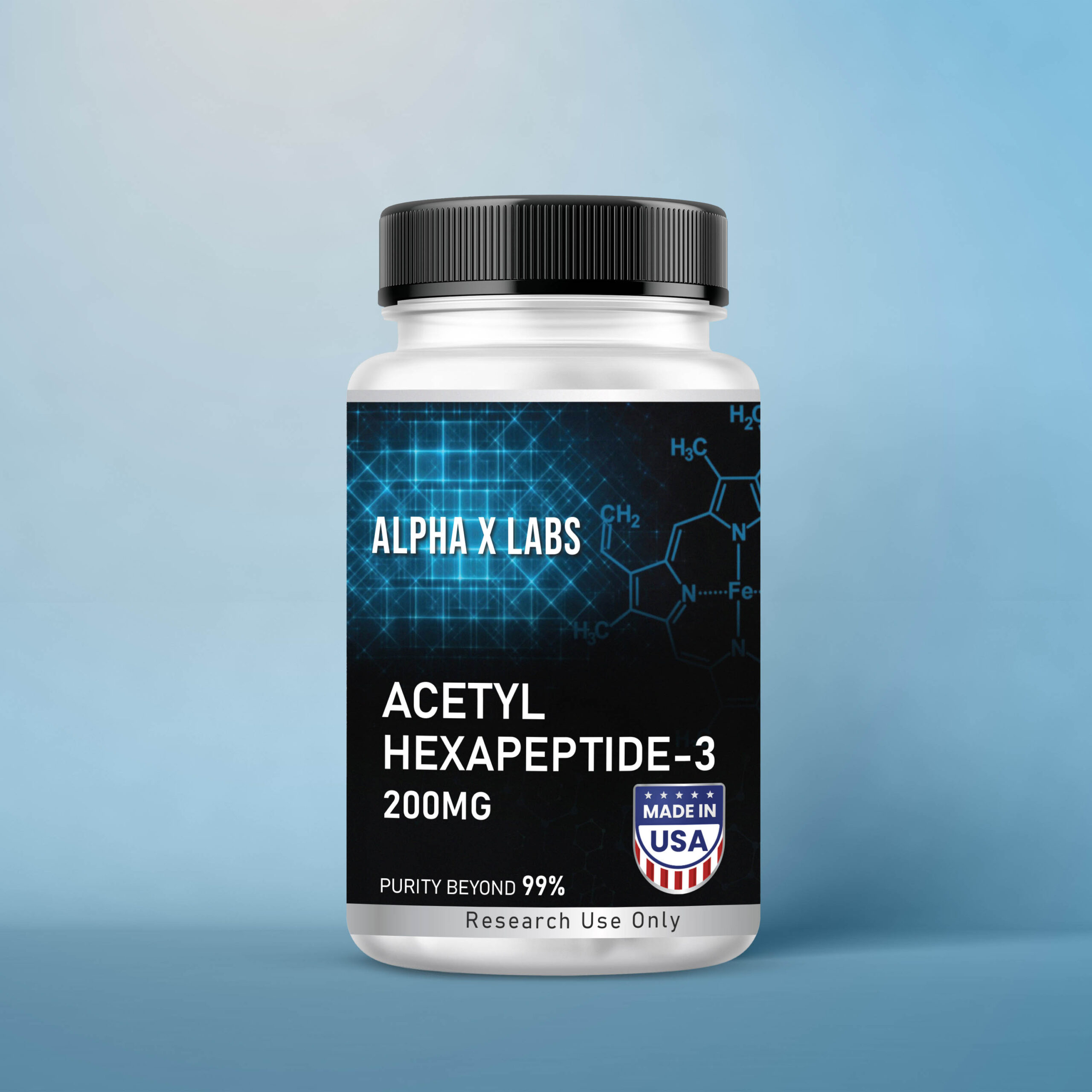
Acetyl Hexapeptide-3 Peptide
Acetyl Hexapeptide-3, also known as Argireline, is a synthetic hexapeptide extensively researched for its potential action in reducing wrinkle formation in skin tissues. It was developed as a competitive inhibitor of SNAP-25 (synaptosome-associated protein 25), a key component of the SNARE complex involved in synaptic vesicle exocytosis (the release of signaling molecules from cells).
SNAP-25 is a part of the mechanism that helps transmit signals from nerves to muscles. Because of the structural similarity between the N-terminal region of SNAP-25 and Acetyl Hexapeptide-3, the peptide may interfere with SNARE complex formation, potentially inhibiting the exocytosis of acetylcholine — a neurotransmitter involved in muscle contraction. Through this action, Acetyl Hexapeptide-3 is explored in research for its potential to reduce muscle movements associated with expression lines and fine wrinkles in skin models.
Chemical Makeup
Molecular formula: C₃₄H₆₀N₁₄O₁₂S
Molecular weight: 888.99 g/mol
Other known titles: Acetyl Hexapeptide-8, Argireline
Research and Clinical Studies
Wrinkle Studies
Several experimental studies have investigated Acetyl Hexapeptide-3 in topical formulations. Some reported reductions in wrinkle depth and improvements in skin microtopography after repeated application compared to control formulations. Certain studies also suggested the peptide may enhance skin hydration and water retention, which are important factors in skin texture and appearance.
Muscle Activity and Signal Modulation
In research settings, Acetyl Hexapeptide-3 has been explored as a milder, non-invasive alternative to bacterial neurotoxins in models of muscle contraction because it may act directly on superficial skin layers and potentially influence underlying muscle cell signaling.
Additional Research Areas
Experimentation has also looked at effects on collagen synthesis, muscle spasms, and even scar tissue morphology in controlled laboratory settings, though mechanisms in these areas are still being explored and vary markedly by model and study design.
Acetyl Hexapeptide-3 peptide is available for research and laboratory purposes only. Please review and adhere to the site’s Terms and Conditions before ordering.