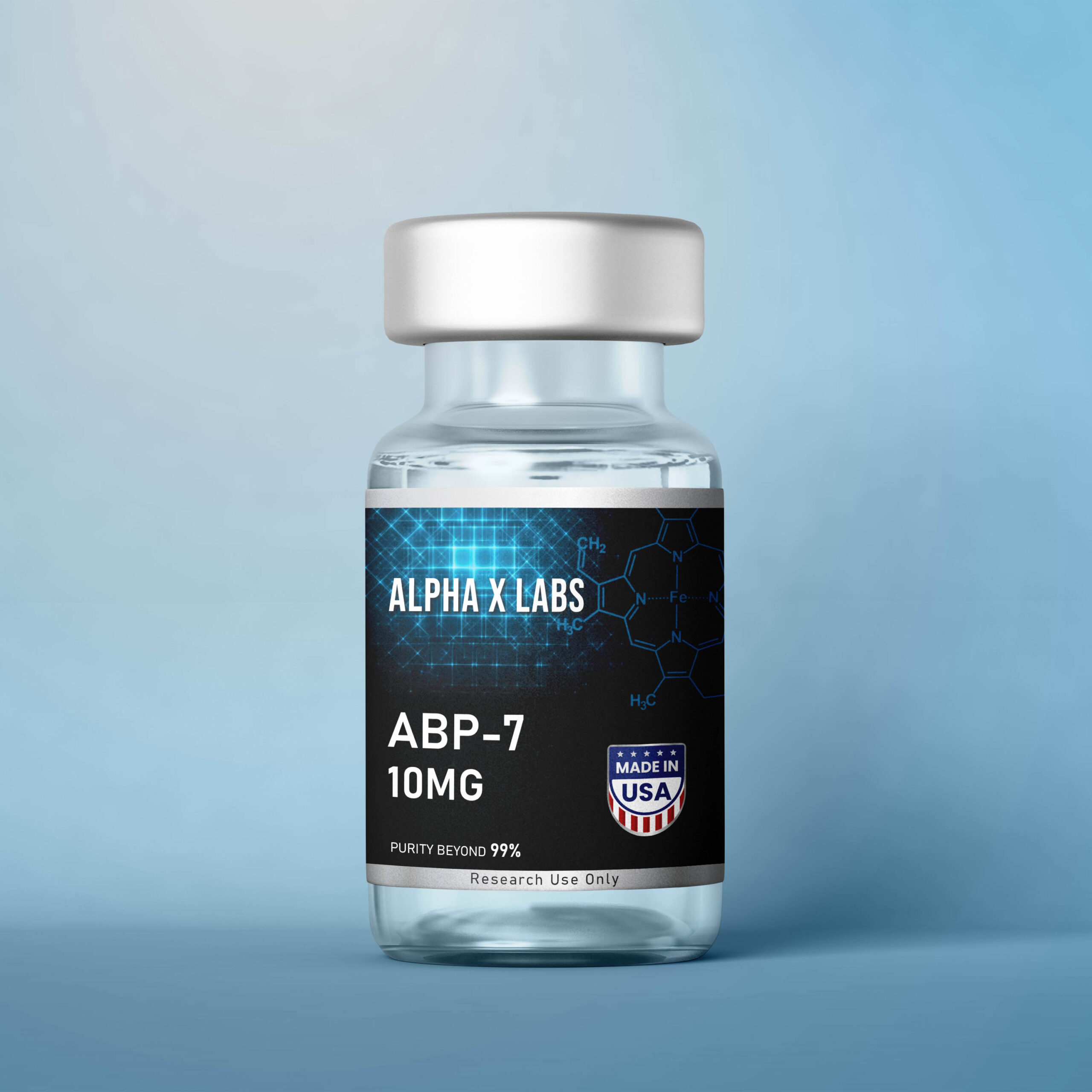
Description
ABP-7 (actin binding peptide-7) is a heptapeptide composed of seven amino acids with the sequence Acetyl-LKKTETQ. This peptide appears to be an N-acylated 17–23 fragment derived from a larger molecule known as Thymosin Beta 4. For this reason, it is sometimes referred to as a TB-500 fragment.
ABP-7 is a synthetic peptide produced using solid-phase peptide synthesis techniques. Some researchers consider the LKKTETQ sequence to represent the primary actin-binding domain of Thymosin Beta 4. As a result, ABP-7 is thought to exhibit similar actin-binding properties.
This domain inhibits the polymerization of globular actin (G-actin) into filamentous actin (F-actin), a mechanism known as actin sequestration. This process may increase intracellular levels of G-actin. Actin is a major component of the cellular cytoskeleton and plays an essential role in maintaining cell structure, movement, and shape.
By stabilizing actin in its monomeric form, ABP-7 may influence cellular migration and shape adaptation. These processes are important in many biological functions, including wound healing and tissue regeneration. Disruption of actin polymerization may also affect intracellular transport and signaling pathways that rely on cytoskeletal dynamics.
Chemical Makeup
Molecular Formula: C38H81N9O20
Molecular Weight: 889.5 g/mol
Other Names: TB-500 Fragment, Ac-LKKTETQ
Research and Clinical Studies
ABP-7 and Wounds
Studies have examined the role of ABP-7 in wound repair, particularly in aged mouse models. Research focused on keratinocyte migration, collagen deposition, and wound closure. Findings suggested that ABP-7 may promote wound healing in a manner similar to Thymosin Beta 4 by enhancing epidermal cell migration and increasing collagen levels at the wound site.
Some studies also suggest that ABP-7 may interact with purinergic receptors, increasing intracellular calcium levels. This may activate pathways that support cell migration and tissue remodeling during wound healing. Further research is required to confirm these effects.
ABP-7 and Tissue Scarring (Fibrosis)
Research has explored the effects of ABP-7 on liver fibrosis through its interaction with hepatic stellate cells. Data suggests that ABP-7 may inhibit PDGF-BB-induced upregulation of PDGF beta receptors, alpha-smooth muscle actin, and collagen type I. It may also block phosphorylation of Akt and PRAS40, potentially reducing cell proliferation and migration associated with fibrosis.
ABP-7 and Angiogenesis
ABP-7 may support angiogenesis by promoting endothelial cell migration and tube formation, which are key steps in the development of new blood vessels. Its actin-binding properties may influence cytoskeletal rearrangements required for these processes. These mechanisms are still under investigation.
Important Notice
This product is intended for research and laboratory use only.
Not for human or animal consumption.
Please review the site’s terms and conditions before ordering.
References
Esposito et al. – Peptide synthesis and characterization
Sosne et al. – Biological activities of thymosin beta 4 peptides
Philp et al. – Wound repair studies in mice
Huang et al. – Protein detection in wound models
Shah et al. – Thymosin beta 4 effects on hepatic stellate cells