Description
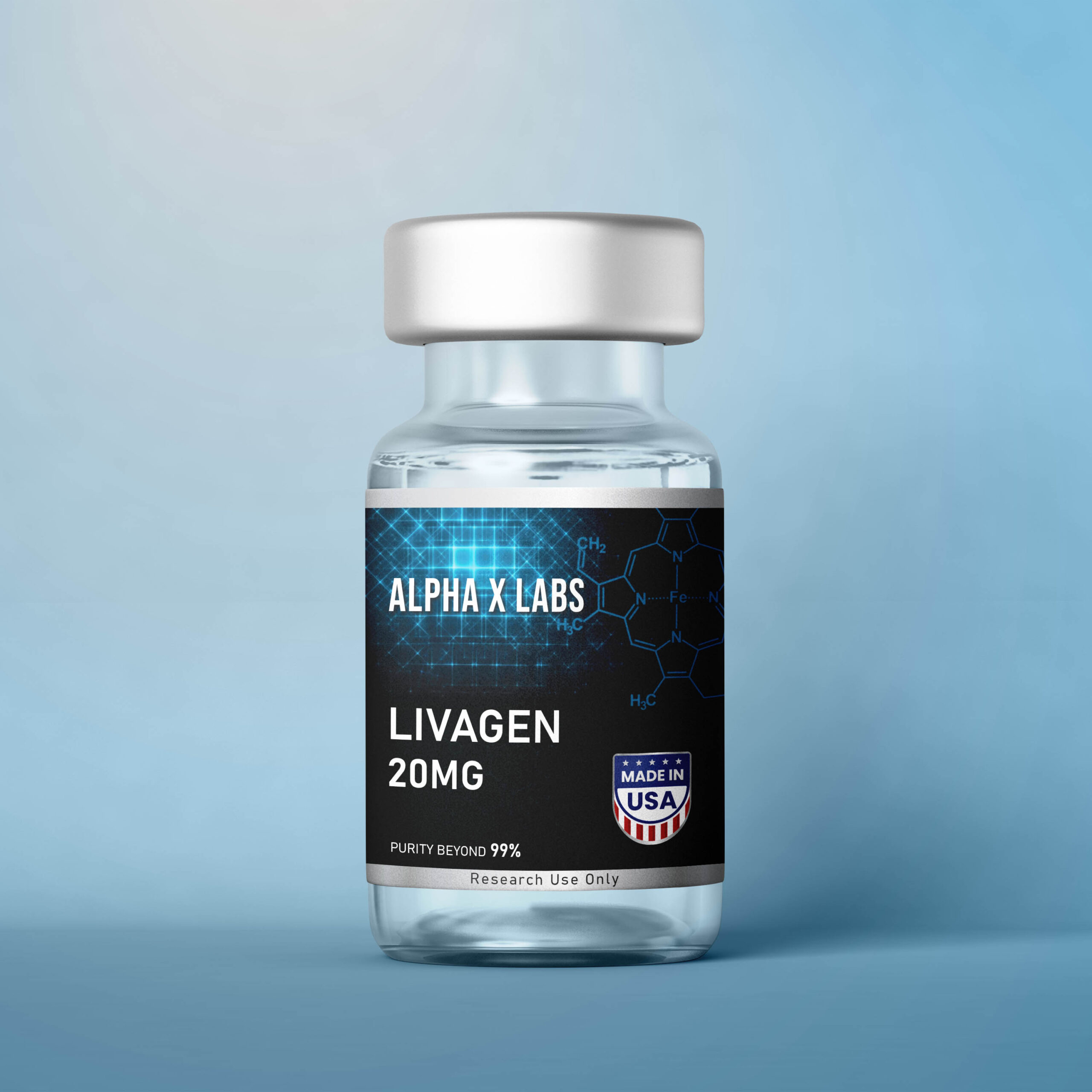
Livagen is a short peptide containing four amino acids: lysine, alanine, aspartic acid, and glutamic acid. Considered to be a bioregulator, this peptide may act on the DNA structure and impact functionality. The primary potential of Livagen is identified in how it acts on chromatin, DNA, and genes.
Scientists describe DNA as a double helix structure surrounded by proteins called histones. These histones bind together forming chromatin, and chromatin further condenses into chromosomes, which help form genetic material specific to each organism. Livagen has been considered by researchers for its potential to ‘de-condense’ these chromatin materials. As a result, some genes that had become non-functional might become active, possibly improving cell activity and production. Researchers suggest that Livagen may increase energy levels and skin elasticity and possibly induce improvements in immune system functionality via this mechanism.
Researchers have also hypothesized that Livagen may act on lymphocytes, possibly reactivating ribosomes by unpacking chromatin and modifying gene expression. These lymphocytes are white blood cells essential for attacking foreign impurities entering the system and enhancing immunity. In this way, Livagen may exhibit potential to improve the immune system by coordinating cellular responses and controlling inflammatory responses.
Chemical Makeup
Molecular Formula: C₁₈H₃₁N₅O₉
Molecular Weight: 461.5 g/mol
Other Known Titles: KEDA
Research and Clinical Studies
Livagen and Gene Regulation
Certain studies suggest that Livagen peptides may influence chromatin structure in lymphocytes, increasing the accessibility of previously silenced regions of DNA and potentially enhancing transcriptional activity. Some research reports that this chromatin remodeling could expose genes that are less active in aged cells.
Livagen and Nociception
Some experimental work has explored whether Livagen might interact with enzymes that degrade enkephalins, neurotransmitters involved in pain signal transmission. These studies indicate that Livagen may slow down the degradation of enkephalins, possibly maintaining higher levels of these peptides without directly binding opioid receptors.
Livagen and Antioxidant Systems
In models of liver pathology or oxidative stress, Livagen has been studied for its potential hepatoprotective and immunoprotective properties. It may help normalize antioxidant status and support liver function during episodes of hepatitis or other liver challenges, although the exact mechanisms are not fully understood.
Livagen and DNA Repair
Livagen has been proposed in the scientific literature to influence DNA structural changes over time, potentially inhibiting or reversing age-related chromatin condensation and encouraging cellular functions associated with younger cells.
Livagen peptide is available for research and laboratory purposes only. Please review and adhere to our Terms and Conditions before ordering.